
The Top 10 Tourist Destinations in the World You Need to Visit
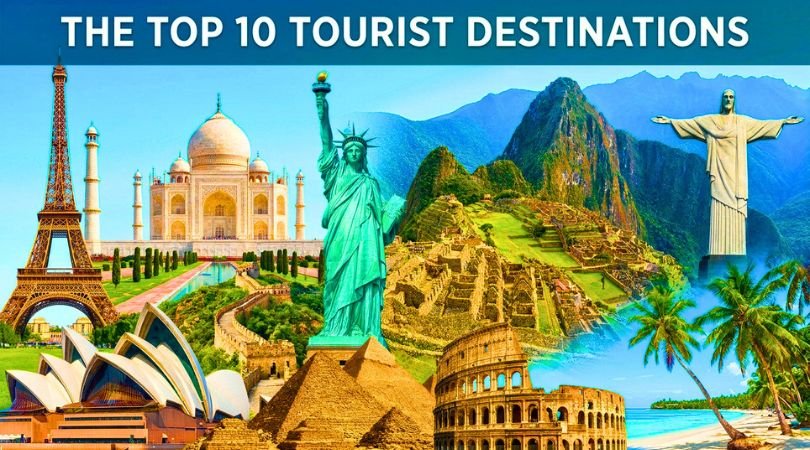
Traveling is one of the most rewarding things a person can do. It broadens your perspective, introduces you to new cultures, and creates memories that last a lifetime. But with so many incredible places scattered across the globe, deciding where to go first can feel overwhelming. To help you plan your next adventure, we have put together a carefully curated list of the top 10 tourist destinations in the world — places that consistently draw millions of visitors for very good reason.
Whether you are a first-time traveler or a seasoned explorer, this list has something for everyone.

1. Paris, France
There is a reason Paris is one of the most visited cities on earth. The French capital is a living masterpiece — a city where world-class art, historic architecture, exceptional cuisine, and romantic atmosphere come together in a way that no other destination quite replicates.
The Eiffel Tower is the obvious starting point, and even though you have seen it in a thousand photographs, nothing prepares you for the scale and elegance of it in person. Beyond the iconic landmark, Paris rewards those who wander its neighborhoods without a fixed agenda. Stroll through Le Marais and discover hidden courtyards, independent galleries, and some of the best falafel you will ever eat. Spend a morning at the Louvre — home to the Mona Lisa and thousands of other works spanning centuries of human creativity — and an afternoon at the Musée d’Orsay, which houses an extraordinary collection of Impressionist paintings.
Paris is also a city for food lovers. From buttery croissants at a neighborhood boulangerie to a formal dinner at a Michelin-starred restaurant, eating well here is practically unavoidable. The city’s café culture alone — sipping an espresso at a sidewalk table while watching the world go by — is worth the trip.
The best time to visit Paris is in spring (April to June) when the city blooms and the weather is pleasant without the peak summer crowds.
2. Bali, Indonesia
Bali has earned its reputation as one of the world’s great travel destinations, and it continues to live up to the hype. This Indonesian island offers a rare combination of natural beauty, spiritual culture, world-class surf, and genuine hospitality that keeps visitors coming back year after year.
The island is divided into distinct regions, each with its own personality. Ubud, nestled in the highlands, is the cultural heart of Bali — home to traditional dance performances, artisan workshops, rice terrace walks, and some of the most thoughtfully designed boutique hotels in Southeast Asia. Seminyak and Canggu attract a younger, more cosmopolitan crowd with their beach clubs, independent cafés, and vibrant nightlife. Uluwatu, perched on dramatic clifftops above the Indian Ocean, is where surfers and sunset chasers converge.
Bali’s Hindu temples are among its most defining features. Tanah Lot, rising from a rocky outcrop in the sea, is especially stunning at dusk. Tirta Empul, a sacred water temple where locals and visitors participate in a traditional purification ritual, is one of the most spiritually moving experiences on the island.
Food in Bali is another highlight. Nasi goreng, satay, fresh tropical fruit, and the famous babi guling (suckling pig) are all worth seeking out. And the island’s wellness scene — yoga retreats, traditional Balinese massage, and meditation centers — draws those looking to rest and reset as much as those chasing adventure.
3. Tokyo, Japan
Tokyo is unlike any other city in the world. It is simultaneously one of the most technologically advanced urban environments on the planet and a place with deep reverence for tradition, ritual, and craft. Navigating that contrast is what makes visiting Tokyo such a uniquely fascinating experience.
The city is enormous — with a greater metropolitan population of over 37 million people — yet it functions with a precision and cleanliness that consistently astonishes first-time visitors. The subway system runs on time to the minute. Streets are immaculate. Service in restaurants, hotels, and shops reflects a cultural commitment to quality and care that is genuinely humbling.
Tokyo’s neighborhoods each have their own distinct character. Shibuya is home to the world-famous scramble crossing, surrounded by towering screens and department stores. Harajuku draws fashion-forward visitors to Takeshita Street, where youth subcultures express themselves in extravagant style. Asakusa preserves the atmosphere of old Edo, with the ancient Senso-ji Temple at its center. Akihabara is a sensory overload of electronics, anime, and gaming culture. Shinjuku offers everything from the neon glow of its entertainment district to the tranquility of the Shinjuku Gyoen National Garden.
And then there is the food. Tokyo has more Michelin-starred restaurants than any other city in the world. Ramen, sushi, yakitori, tempura, tonkatsu — the depth and quality of Japanese cuisine available in Tokyo is staggering, and even a simple bowl of noodles from a tiny shop tucked under a railway arch can be extraordinary.
4. New York City, USA
New York City needs little introduction. It is one of the great cities of the world — a place of relentless energy, extraordinary diversity, and cultural richness that makes it endlessly compelling to visit regardless of how many times you have been.
Manhattan’s skyline is iconic, but the city’s appeal extends far beyond what you can see from above. Central Park offers 843 acres of green space in the middle of one of the densest urban environments on earth — perfect for a morning run, a rowboat on the lake, or simply sitting on a bench and watching the city breathe. The Metropolitan Museum of Art is one of the finest museums anywhere, with a collection so vast that you could return dozens of times and still find something new.
Brooklyn has become one of the most exciting boroughs in recent years. Williamsburg and DUMBO are packed with independent restaurants, art galleries, rooftop bars, and design-led shops. The view of the Manhattan skyline from the Brooklyn Bridge Park at dusk is one of those experiences that reminds you why people fall in love with this city.
Eating and drinking in New York is its own adventure. Bagels and lox on the Lower East Side, dim sum in Chinatown, a slice of pizza folded in half and eaten standing up, a $20 cocktail at a speakeasy-style bar in the West Village — the city’s food scene reflects the full breadth of its immigrant history and creative spirit.
5. Rome, Italy
Few places in the world carry as much historical weight as Rome. Walking through the city is like moving through layers of civilization — ancient ruins give way to Renaissance piazzas, which blend into Baroque churches and modern neighborhoods, all existing side by side in a way that is uniquely Roman.
The Colosseum, the Roman Forum, and the Palatine Hill together form one of the most significant archaeological sites on earth. Standing inside the Colosseum and imagining the events that once took place there is a genuinely sobering experience. The Pantheon, remarkably preserved after nearly two thousand years, remains one of the greatest architectural achievements in human history.
Vatican City, the world’s smallest independent state, sits within Rome and draws millions of pilgrims and tourists annually. St. Peter’s Basilica, designed by Michelangelo, is breathtaking in scale and grandeur. The Sistine Chapel, with its famous ceiling painted by the same artist, is one of those rare artworks that genuinely lives up to its reputation.
Rome is also a city for eating and drinking well. Cacio e pepe, carbonara, supplì, gelato, and a perfectly pulled espresso consumed standing at a bar counter — Roman food culture is unpretentious, ingredient-driven, and deeply satisfying.
6. Machu Picchu, Peru
Machu Picchu is one of those places that stops you in your tracks. The fifteenth-century Inca citadel, perched high in the Andes Mountains at an elevation of over 2,400 meters, is a feat of human engineering and vision that continues to astound historians and visitors alike.
Getting there is part of the experience. Whether you take the train from Cusco or hike the famous Inca Trail over several days through cloud forest and mountain passes, the approach to Machu Picchu builds anticipation that the destination fully rewards. The moment the citadel comes into view — stone terraces and temples emerging from the mist against a backdrop of dramatic mountain peaks — is genuinely unforgettable.
Cusco itself is worth spending time in before or after your visit. Once the capital of the Inca Empire, it is now a vibrant city with a rich blend of indigenous and colonial heritage, excellent restaurants, and a lively arts scene.
7. Safari in Kenya
For many travelers, witnessing the natural world on a safari in Kenya represents the experience of a lifetime. The country’s national parks and game reserves — most famously the Maasai Mara — offer access to wildlife encounters of a scale and intimacy that simply cannot be replicated anywhere else.
The Great Migration, in which over a million wildebeest and hundreds of thousands of zebra move between Tanzania’s Serengeti and Kenya’s Maasai Mara in search of fresh grazing, is widely considered the greatest wildlife spectacle on earth. Witnessing a river crossing — where thousands of animals plunge into crocodile-filled waters — is one of nature’s most dramatic and primal events.
Beyond the migration, Kenya’s reserves are home to the Big Five — lion, leopard, elephant, buffalo, and rhino — along with cheetahs, giraffes, hippos, hyenas, and an extraordinary variety of bird life. The landscape itself, stretching out under an enormous African sky, has a grandeur that stays with you long after you return home.
8. Santorini, Greece
Santorini is one of the most photographed places in the world, and the photographs do not lie. The island’s white-washed buildings with their famous blue domes, draped across the edge of a volcanic caldera above the Aegean Sea, create a visual drama that is hard to match anywhere in the Mediterranean.
Oia, perched at the northern tip of the island, is the most iconic village and the place to be for sunset — though you will share the experience with a significant crowd. For a more relaxed atmosphere, the villages of Imerovigli and Firostefani offer equally stunning caldera views with fewer visitors.
Santorini’s volcanic history has also blessed it with some unusual beaches. The Red Beach, near the ancient site of Akrotiri, is dramatic and striking. The black sand beaches at Perissa and Perivolos are wide and lively in summer.
The island also produces excellent wine, particularly the crisp, mineral-driven Assyrtiko white grape that thrives in the volcanic soil. A glass of Assyrtiko overlooking the caldera at dusk is one of life’s simpler but more memorable pleasures.
9. Dubai, UAE
Dubai has transformed itself over the past three decades from a modest trading port into one of the most ambitious and futuristic cities in the world. For travelers interested in modern architecture, luxury experiences, and a glimpse into what urban life might look like in the future, Dubai delivers on an extraordinary scale.
The Burj Khalifa, standing at 828 meters, is the tallest building in the world and the defining image of modern Dubai. The view from the observation deck on a clear day is jaw-dropping. The Dubai Mall, at the base of the tower, is not just a shopping center — it contains an aquarium, an ice rink, a virtual reality park, and one of the most dramatic indoor waterfalls you will ever see.
But Dubai is more than glass and steel. The Al Fahidi Historical Neighborhood offers a glimpse into the city’s pre-oil past, with wind-tower houses and narrow alleyways leading to traditional souks selling gold, spices, and textiles. A dhow cruise along Dubai Creek at sunset connects the old city with its dazzling modern skyline in a way that feels uniquely evocative.
10. The Maldives
The Maldives represents something close to the ideal of a tropical paradise. This island nation in the Indian Ocean is made up of over a thousand coral islands spread across a vast expanse of turquoise water, and it has built a global reputation for offering some of the most luxurious and visually stunning resort experiences on earth.
The overwater bungalow — a private villa built on stilts above a crystal-clear lagoon — was essentially invented here, and it remains the defining image of a Maldives holiday. Waking up, stepping off your private deck, and swimming directly into warm, impossibly clear water is an experience that is difficult to describe and impossible to forget.
The Maldives is also one of the world’s great diving and snorkeling destinations. The coral reefs surrounding the islands are home to manta rays, whale sharks, sea turtles, reef sharks, and thousands of species of colorful fish. Even the house reefs just off the beach at many resorts offer remarkable underwater experiences without needing to travel far from shore.
Because the Maldives sits only slightly above sea level, it is one of the countries most vulnerable to the effects of climate change and rising sea levels. Visiting now, while these islands are still in their extraordinary natural state, feels both a privilege and a reminder of what is at stake.
Final Thoughts
The world is full of remarkable places, and this list only scratches the surface of what is out there waiting to be discovered. Whether you are drawn to ancient history, natural wonders, vibrant city life, or peaceful island escapes, the destinations above represent some of the finest travel experiences our planet has to offer.
The most important thing is simply to go. Travel has a way of changing how you see the world — and how you see yourself within it. Start planning, book that ticket, and let the journey begin.
